Thoughts on nearby covers

Thoughts on some covers - Alien Trilogy

This piece is community funded. If you enjoyed this article, please support my writing by visiting my Patreon and becoming a patron.

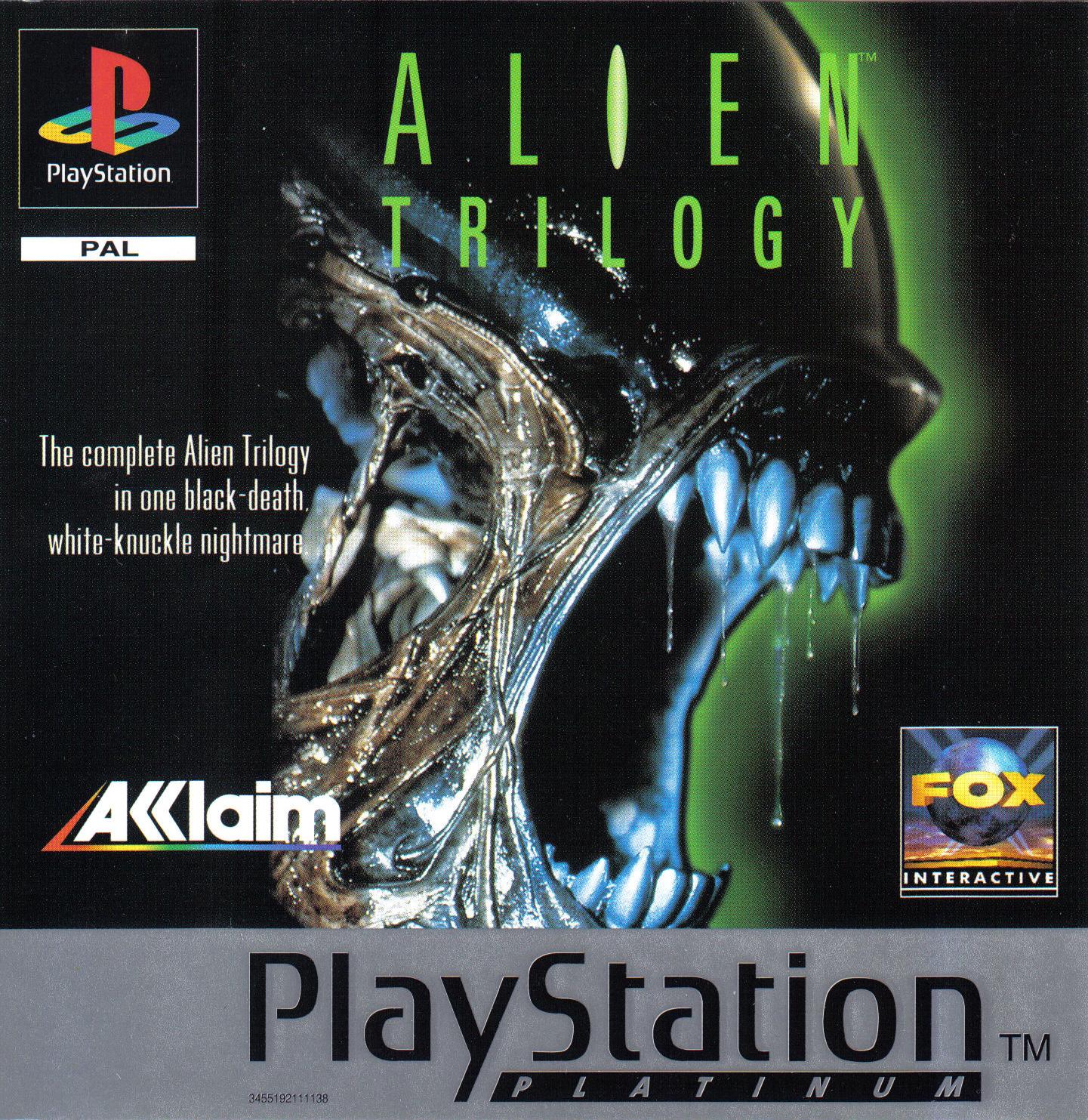
One of my most vivid videogame-related childhood memories is this. In July of 1996, my brother, the middle one, had done our mam no favours by asking for a copy of Alien Trilogy for his birthday. Despite the game having launched four months earlier, which in modern terms would have made it a hundred years old by July, nowhere in our area had any copies in stock. By which I mean, none of the three local video rental shops had it in stock, because this was Ireland at a time when the commercial exchange of games was a novel quirk and not a viable business angle.

Packed into the car were we for a rare trip to The Tallaght Square, famous in our minds for reason number one of being the only remotely accessible shopping centre in the greater Dublin area at a time before Blanchardstown and Liffey Valley. Reason number two for its fame was that it was pyramidal, not square, and this for us, pre-internet, constituted a joke whose humour was always worth revisiting.

So it was immediately a bit of a journey just to find this game, and when we did recover a copy in The Square, it felt all the more of a treasure. I’m sure there were other errands on that trip but my memory tells me it was the only thing we came away with. My brothers and I passed the box around for the long drive home, poring over the manual and delighting in anticipation of what the box cover suggested, foreboding the Alien’s imminent pounce. Once at home we put it on and certainly thrilled in the experience, but now I suspect I didn’t enjoy it half as much I did its prelude.

Perhaps it’s because back then we had fewer games and an over-abundance of free time that we would so patiently gorge on a game’s extra material like aesthetes at an art museum. Now, as I have no lack of the former but absolute lack of the latter, I seldom consciously dwell on a game’s cover as intensely as I used to. While I still variably note my appreciation for or dislike of any given box art, I don’t study what I enjoy about it and savour the anticipation or place it in context, beyond exceptional circumstances. I miss that.

So, with my limited vocabulary, I’d like to take a spell to put that sort of mindfulness to a platoon of games stationed at hand beside me, them dust-coated sentries what have kept me company these past years of working and writing. Continue reading →

And you with it, speck of dust

And you with it speck of dust

[Endgame spoilers for Demon’s Souls, Dark Souls and Dark Souls 2 to follow.]

As I prepared to sit down and finally write this piece, I did a quick Google search for the key words “Dark Souls” and “nihilism”. I thought I might get one or two hits with the game loosely orbiting the themes of existentialism, since that’s what usually happens when you go looking for specific matches of a game to a theme. But this time was different. The first, I don’t know, ten results wore their investment to the subject matter on their titles: Dark Souls through Sartre and Camus, Kierkegaard and Dark Souls 2, Dark Souls as a nihilistic manifesto.

Well. These are writers who clearly take their jobs seriously, who know what they’re talking about. Just that in itself can be quite daunting—you need a certain level of emotional investment to live up to the standards they’re setting for you as a reader. Maybe you don’t need to know any Camus or Kierkegaard before going in, they’ll explain everything as you’ll need it, but you still have to retain everything they’re throwing at you if you want to satisfy your end of the bargain. And it’s heavy stuff, trying to collapse decades-worth of a fellow’s life work down to a few summary paragraphs, trying to make sense of such a big thing as existentialism at the same time as relating as messy a videogame as Dark Souls.

But sure, it’s not just Dark Souls—every videogame is messy. They’re enormously complicated machines of narrative and function. That they’re often made by so many people, they’re the product of so many different societal factors that smudge and obfuscate and interrelate and form entirely new spheres of interaction. At one of their basest levels they speak languages we’re still puzzling out ways to decode. In a cultural space where half of us are yet figuring our arse from our elbows, officially speaking, as to what, in actuality, a videogame is.

It’s tiring stuff. And true to form, after reading a bunch of these articles, I was wrecked. I felt exhausted even keeping up with the gist of what they were saying. In that, they’re children of the medium, at least. I think there might be a vein in games criticism that values this capacity to affect exhaustion, if only to pay homage to the source. As I typed that out it was a joke, but the longer I stare at it…

You’ve already gathered that I overcame my exhaustion and took to writing my piece. I could say that this was all an allegory for themes of existentialism in Dark Souls, insofar as I stumbled face first into paralysis and dread at the sight of my physical, intellectual and spiritual limitations, but eventually climbed these obstacles and exerted this aspect of myself triumphantly. I could say that, and thematically it would be very nice if it was true. If there are any themes of existentialism in the preceding story, it is only through the accident that I am a person who exists. Which might be enough to prove the point, but since we’re getting into the realm of telling a story about my story, let’s not. Continue reading →

Level 99 Capitalist

When Crytek Nottingham announced they would be releasing Homefront: The Revolution, a game where grassroots American militia engage in guerrilla warfare against North Korean occupiers, they told Debbie Timmins of The Average Gamer that they don’t want to make it political. This, the sequel to a title whose marketing department spent a fair share of energy trying to convince everyone it was written by the hand that wrote Apocalypse Now and Red Dawn. It’s hard for me to say whether the original Homefront quite lived up to that conceit—I played just one level and never returned—but given how it so swiftly tumbled into obscurity, I’m going to hazard a guess at “not very”. So, this time around, Crytek Nottingham are nipping that in the bud: this game with a politicized setting, from a series with politicized marketing, will not have a politicized narrative.

Meanwhile, a few weeks prior, Nintendo fell over themselves to adopt the same stance. By pure fluke, Tomodachi Life originally released with the option of same-sex relationships, but as soon as Nintendo caught the error they patched it out. In doing so they thought they were restoring the world to its rightful state, a world without gay people, thereby describing their ideal of family friendliness as heteronormative and implicitly homophobic. To not patch it out, however, might have been seen as progressive and accepting or at least tolerant of homosexuality (heaven forbid), so they went ahead and toed the line they’ve always toed.

In that moment, the company found itself in that impossible position of having taken a political stance simply by acknowledging an issue exists. The truth of the matter goes deeper: even if they had never accidentally made Tomodachi Life lovely and gay, it would have still been characterised as political by virtue of their intended heteronormativity, whether or not they were adopting that stance consciously.

It hasn’t been long since the marketers of gritty and politically inept titles had a go at spinning their ineptitude as thematically brilliant, I’ll believe you’ll find, even if nine times out of ten those feints at political themes turned out to be little more than opportunistic marketing techniques. Maybe now we’re starting to see a turn away from all that, as publishers and marketers are realising it does them little good in the long term to advertise their games as snake oil, a miracle cure-all for your narrative needs, and now instead are trying to entreat with the spirit of gaming yore and accept that they don’t have the wherewithal to deliver on promises of narrative intrigue.

And this is wonderful. It’s almost a breath of fresh air. Not because “we should let games be games” or some such dreadful truism, but because, look at how preposterous these statements are! Look at how these intrinsically political media texts trip and perfectly nut themselves on the fence they were trying to straddle, revealing their authors as mortally, irredeemably clumsy.

It’s not just that this approach of theirs, their fear of the political, is at least honest on their part when compared to that of the gritty snake oil salesmen, and so is less condescending. Though there is that—it’s a more pleasant way to be lied to. Moreover, it represents a slight change in the way these creators of art and entertainment view themselves and the world they operate within, a shift towards a future consciousness where their art and where all art is politically imbued, even if that shift is here marked by a very silly attempt at denying that future.

So I take great joy in these attempts to remain apolitical, because counter to substantiating the belief that such a thing is possible, they highlight the intrinsic capacity for politics within any media text of this nature and they show it to be inescapable. Much like Nintendo emphasising a political narrative merely by acknowledging it, such feeble bids to absolve themselves of responsibility only reveal the political narrative already latent in the text, whether it’s a wargame afraid to talk about war, or the limiting heteronormativity of a happy life simulator, or misogynistic plotpoints that publishers are suddenly finding themselves needing to be aware of, or a mindless action romp with delusions of satire, or any of the abundant examples that leap to mind.

In turn, attention flows from the politics of a game’s overt setting and plot to the politics of a game’s ludic narrative—the intrinsic meaning embedded within gameplay and its design, such as how Papers, Please lures you into becoming a dehumanizing bureaucrat, or the clash of BioShock Infinite’s gung-ho gunplay with its aspirations of criticising US patriotism. These archetypes of game design aren’t just suddenly political, they’ve always been political. Perhaps it’s more discrete because, well, designers have traditionally neglected to look for it.

By now it’s old hat for many games critics how prolonged exposure to the norms and values in our culture has ingrained them into our minds, and through us they seep back into the art we make, deepening, proliferating. How the politics we’re raised into affects our own, how our politics influences the media we enjoy, and vice versa. The payoff for the critic is in coming to recognize the little nuggets of culture in our media that were previously invisible, using this knowledge to better understand a game, and sharing with the community in order to collaborate towards building better games for everyone.

One such nugget, I think, is the ideology of capitalism as narrated by economic exchanges of labour and wealth, which takes shape in the design archetype of levelling up.

Mechanically and systemically, levelling up usually constitutes this: as the player achieves ludic goals, they’re rewarded with points or toys to increase their proficiency at completing future ludic goals. It’s a cute little economic process devised around accruing and storing wealth, since that’s what experience points represent: a quantitative measure of one’s power and successes, an abstract currency to be traded for self-improvement, although ‘self-improvement’ in this regard mainly extends to ‘improving one’s ability to collect currency.’

As a result of this abstraction of experience into a currency format, self-improvement and self-actualization become acts of consumerism. The more a game’s design succeeds at hooking players into a consumerist mindset, the more addictive it becomes—it feeds into a hole in our lives created by the needless want for more possessions, an avarice necessary for capitalism to function but which must remain perpetually unfulfilled. Here in the virtual world it has almost the scent of an achievable goal, so we often pursue it as a substitute solution for the unhappiness in our lives. The game serves as a power fantasy and a narrative fantasy, but also as an economic fantasy for the attribution of possessions-as-personal growth.

So, if we consider the process of levelling up as a capitalist narrative, what does it describe? Capitalism is founded upon an exchange of labour for wealth, where labour is the product of a labourer to be bought and used by others in pursuit of their own wealth. In terms of a videogame, labour would be the activities involved in generating the player’s wealth, such as combat in Final Fantasy IX and questing in Skyrim. Much of the time these activities aren’t inherently enjoyable but still we tolerate them for the rewards, accepting them as part and parcel of the labour trade agreement between ourselves and the game. There’s already the linguistic likening of the labour of combat in a JRPG as a grind similar to a dreary 9-to-5 job: just put in the hours, you can enjoy yourself on the weekend.

In this exchange of labour for wealth, you farm baddies to be able to better farm baddies. Baddies in this sense are little more than little packets of experience points waiting to be freed up and collected by the player. As one ingests food for physical nourishment, we slaughter enemies and absorb their remains—their loot and experiential value in Final Fantasy IX, their souls in Demon’s Souls (since the game has the head on it to make the exchange properly sinister). In the scheme of capitalism they’re nary more than resources waiting to be cracked open and consumed, and through their consumption the player-character grows more fulfilled as a person, stronger, as their skills develop they become more capable, more wizened.

Societies that have become enamoured with capitalism dictate that the more numbers a person has in their bank account, the higher they’re elevated above their fellow humans in terms of social status and legal freedom. Similarly, the more money they have, the more free time they have within which to spend it and enjoy life, since money is a prerequisite for this, so spiritual actualization is linked to the privileges unlocked through wealth. Not so with those affected by poverty, who are shamed for their lack of success within the system and depicted as villains, wastrels, parasites—scapegoats for social woes. Poor folk instead have to find contentment in their work, short of which perhaps solace might be scrounged from thoughts of them being the lifeblood or soil of society, or God’s chosen people, or whatever other transcending fancy that makes it easier survive a humble living.

Levelling up has the best of both worlds. On one hand, the process of labouring is valued as core to the game’s entertainment factor, even in games where the addictiveness barely serves as a haze to conceal the soul-destroying monotony of the labour transfer—games like Borderlands. And on the other hand, it produces such wonderful fruits as to render the player undeniable as a profiteer, through rewards like thousands and millions of experience points or wonderful, beautiful weapons only available to the most exclusive of this world’s warriors. By entreating the player as both a labourer and a profiteer, it humours them as successful capitalists without really elevating them above their current station, and points towards the exchange of labour as the source of their fulfilment. Maybe so that they may learn to accede to the benevolence of capitalism in the real world.

By amassing experience points the act of labouring is an act of growing as a person through accumulation of external wealth, a sort of imaginary cyborgization via capital. It’s not about learning lessons and emotionally maturing and growing mentally content with one’s lot and comfortable in one’s existence, which are usually the things we attribute to self-fulfilment, because these things are not measurable through a capitalistic exchange of labour. Instead, self-fulfilment is narrated within the cyclic act of labouring and consuming: “in consuming you find happiness, so consume!”

In her 2014 GDC talk, Lana Polansky identified this narrative as inherent to the capitalist doctrines surrounding winning and losing, win states and fail states. This limits the experiences games can offer a player by virtue of the difficulty in measuring and quantifying things like interpersonal, emotional connections and gamifying them as rewards. Polansky remarks, however, that by subverting the obsession with metrics and win states, games can deliver us to a point of epiphany where these intensely valuable human experiences actually manifest. And it’s simply by ceasing to treat the player as a happy, obedient vessel for capitalism, and instead consider them as a human soul.

Polansky’s talk is largely focused on addressing attempts at instilling legitimate emotional experiences in games through the use of capitalist metrics, so the solutions she provides are with this scope in mind. But like Polansky, I believe that alternative models of growth, be it personal growth or growth in one’s expertise, already exist in games on a whole through the use of epiphany (e.g. grasping and internalizing game logic in Portal) and the natural development of one’s skill at a task (e.g. honing tactics in Demon’s Souls).

So what’s the benefit of seeing all this in this way? Knowing that systems of levelling up are but one way to represent character growth can be beneficial for designers when choosing what structures to put into their game. And being able to recognize that design archetypes are also narrative structures can enable greater harmony between a game and its authors: does the capitalist narrative fit in with the intended themes or does it clash? Do you want to represent the freeing of slaves as a gathering of collectibles and currency, with the act of ‘liberating them’ little more than an exchange of their ownership?

Whether you want them to or not, these narratives exist within games as a matter of fact and interpretation. A lot of the time, they’re political. The irony of denying it is that, in hiding from the consequences of your actions, you inherently make a political statement and the narrative you were trying to deny as apolitical becomes irrevocably political anyway. But it was always political, as are we, by virtue of having been raised in politically-minded societies. Hopefully ten years from now we’ll all look back and laugh at the naivety, this desperate bid to remain impartial and exempt from the world around us.


This piece was community funded. If you liked this article, please consider supporting my writing by visiting my Patreon and becoming a patron.

Worldbuilding and Demon’s Souls: Boletaria’s present history

[Spoilers for Demon’s Souls, minor spoilers for Dark Souls.]

Demons souls and worldbuilding: Boletaria's present histor

If I were I to step outside my front door right now and walk twenty paces to my right, I’d find myself opposite the old mill in Celbridge. Over two hundred years ago it used to be the biggest wool manufactory in Ireland, an impressively huge building encapsulated by an enormous stone wall on the roadside. It overlooks the River Liffey, which, if you followed it, would send you all the way to Dublin bay and into the Irish sea, so whenever we go to feed the ducks we’ve a decent chance of locking eyes with the imposing building. Nowadays it’s used as a community centre-it hasn’t been a factory in decades, but it still carries the name as a sign of its history.

Opposite the mill is a pub with a sign in its window proudly declaring it as the establishment where Arthur Guinness brewed his first beer, Celbridge being his hometown. If I step out from my front door and walk left instead of right I’ll come across a statue of the man put up last year. A couple of minutes walking straight past the statue will lead me to Castletown House, Ireland’s biggest and oldest Palladian house, built for the politician William Conolly nearly 300 years ago. Everyone in Celbridge loves to walk their dogs around the mansion’s grounds so it’s pretty much a local fixture, a piece of history written into the normal way of the town’s landscape.

I doubt there’s a town in Ireland where you couldn’t say one thing or another along these same lines. Naas, where I lived for most of my life, derives its name from the Irish Nás na Rí as the place where the old kings of Leinster used to meet. My parents live in Rathangan, a small town wedged between the Slate river and the Grand Canal, owing a lot of its architecture to the tastes of the folk who worked on the latter. I just now found out Jedward grew up in Rathangan, so we have that in common.

Easy as it is to spot the history in Ireland, I’d hazard the same can be said for wherever it is you grew up or wherever you live now, that your locale has a sense of place hinting towards what it might have been, once upon a time. There’s a 600 year old yew in Maynooth where Silken Thomas spent his life’s last night of freedom, but to near everyone who passes it on the way to class everyday it’s just a big fat tree. It’s the kind of thing that’s easy to overlook or that you just internalise without thinking, especially if you were born and raised being told about this or that piece of living history without having the years yet to properly understand it.

So I like seeing this sense of place carried through to worlds in fiction. It helps to make them feel more substantial and more relatable than just being empty places put in to fill a narrative gap, or in the case of most games, a corridor for you to shoot more guys or a side room to stage a lonely chest. It’s especially vital for games dependant on worldbuilding to project this sensation, since their narrative flounders or flourishes on the sensibility and believability of their world design. How a game’s environment’s are designed isn’t only important in terms of them as a playing field, it’s also a huge component of latent narrative design.

I’ve always thought Demon’s Souls was quite good at acknowledging and reflecting this, since it relies heavily on environmental storytelling to add depth to its relatively simple plot. It’s fortunate that the environments demand a fair amount of your attention if you ever want to reach the end of the game-you’ve the fact that they’re laid out kind of like a music sheet where you have to remember locations and types of enemies and recite combat tactics appropriate to the area, and on top of that they’re like puzzles with the importance of discovering and unlocking shortcuts to facilitate your safe passage. Since there’s so much value to poking and prodding every inch to see what it grants you, these aspects give Demon’s Souls‘ environments a great sense of weight. So it’s wonderful that this degree of scrutiny and attention is rewarded by uncovering narrative detail through the game’s organic flow. Continue reading →

Boletaria wasn’t built in a day


belataria wasn't built in a day 2

(Minor spoilers for Demon’s Souls.)

People like me use the “about” of a game like there’s a tick up our bums. Demon’s Souls is “about death” I’ve heard a million times because it’s reputed as a difficult game where you die a lot. Critics were taking the piss when they said BioShock Infinite is “about shooting” because you shoot a lot (it’s not much about anything (sorry Ken)), but in every other game the action you do the most is sincerely thought by some to be its narrative focus. Demon’s Souls is about death. Presumably it’s also about rolling, shopping, and swinging swords, and when it rains the weather is about getting wet.

The first time I played it my console upped and died as if by a mummy’s curse, erasing all the progress made by my magician character, Bubbles. Years passed with no incident until I decided to give it another try; I had mourned Bubbles such that she was irreplaceable, so rolled instead a temple knight. Holy Boy could cast Heal. I now found I could go for long patches of fresh terrain without dying. Someone said the main currency of Demon’s Souls is the player’s time-there’s truth in that. Dying isn’t such a dreadful thing: it has benefits, and death is likely to be your natural state for enough of the game for you grow accustomed to it. So, the narrative of death is outweighed by impatience.

A few words of backstory: in his lust for power, King Allant of Boletaria awoke an ancient beast, the Old One. I know, I know. The kingdom prospered for a time, but soon it was cut off from the world by a deep fog loosing soul-devouring demons upon the realm. In the same way that demons gorge on souls and bloat with power, so too could humans feast on the souls of their fellows and assimilate them into their own. This ability is what Allant unlocked, and thus the price of the fog is a plague of demons. Now, as the fog spills out over Boletaria’s borders and threatens to consume the world, heroes volunteer themselves to venture into the doomed kingdom. Some go to return the Old One to its slumber and spare the world Boletaria’s fate, others to wrap themselves in the soul arts in their lust for power.

It’s a simple story obscured by being crammed into an opening two-minute cutscene, the usual wisened old woman throwing out words before I’ve the emotional resolve to listen. Honestly, that plus how you decide to end the game completes the whole plot. Because it’s tossed at you so carelessly it’s easy to miss, so most of the game is spent figuring out what your wan was on about. Over this skeletal plot is draped nuance of the world that’s invigorating to uncover, adding taste to the story like honey mustard on a ham.

The latter dichotomy of choosing to save Boletaria or to quest for power through the soul arts runs throughout as implication. Since you can swing your sword at any time, you can always swing it like so at the head of a friendly merchant NPC and see what he was carrying. The option’s there to be a dick, and if you’re really dickish you get the chance to start a quest to be a dick-at-large. For us Umbasa-oathing temple knights, a bit of constraint delineates the ethical path, tending the world to White, which means Good, because Obviously.

Although there are these kinds of decisions to be made, they largely reflect your table manners rather than your morality, because truth be told the whole business of consuming the souls of humans to gain power is a given. It’s a horrible, contemptible, evil act, made ordinary by being very blatantly practical. You won’t get anywhere by abstaining, you’ll hit an early wall against some poor mad chap with a better sword than you. Good luck saving Boletaria when you can’t even get past a normal soulless madman. Morality is literally for the weak, since all it takes to increase your strength is to feed a few thousand innocent Boletarian souls to a demon who lets you level up. I shall avenge thee and all that.

The typical lifecycle of a Boletarian warrior is as follows: They begin alive and healthy and soon are killed by a demon. They get “rescued” to the Nexus, a revolving door back into Boletaria. Every time they die they return here and venture forth-death is nothing to them. They farm the souls of humanity to aid their progress. Eventually they hit an obstacle they can’t overcome. They try and try and meet only failure, and grow frustrated, morose and nihilistic. They plant themselves somewhere and just give up. The phantom of their life fades away until all that remains is their soul, like a pebble on a beach. A passing warrior gathers it up and consumes it for themselves:

“Even if you leave this be, it will only become nourishment for demons. In which case…”

At one point I promised myself I would not feast on the legendary soul of the late Lord Rydell. He seemed like a nice chap, one of the few people with a little backstory to him and everything. Once they called him “Little Allant.” He had a wife he clearly missed. But later I needed another point in my Faith stat, so I chomped down some souls, and well… It’s not that I went back on my conviction so much as I momentarily forgot. Thanks, Rydell. It’s for the cause.

About the Nexus. When fresh heroes sally into Boletaria to die, they get whisked into the Nexus by the Maiden in Black, who preserves and supports whoever will Kill All The Demons so she can lull the Old One back to sleep. Archstones teleport you from the Nexus to the game’s levels littered around the world. You learn how the Old One awoke once upon a time far in the past, and that half the world perished before they could seal it away beneath this limbo. The platoon of Monumentals who achieved this victory gifted the archstones to six kings and rulers to bind the Old One away. Now only one Monumental remains, and the world’s archstones have been left to crumble through time, their purpose long forgotten by humanity. The unusable archstone of the Land of the Giants shows us what happens when a monolith breaks - its connection to the Nexus fails, severing a link in the chain that protects the world from evil.

So the archstones are kind of important in the mythos of the world, even though they’re the usual gameplay device of being a ‘world map’ or a hub so From Software don’t have to geographically link up all the levels.

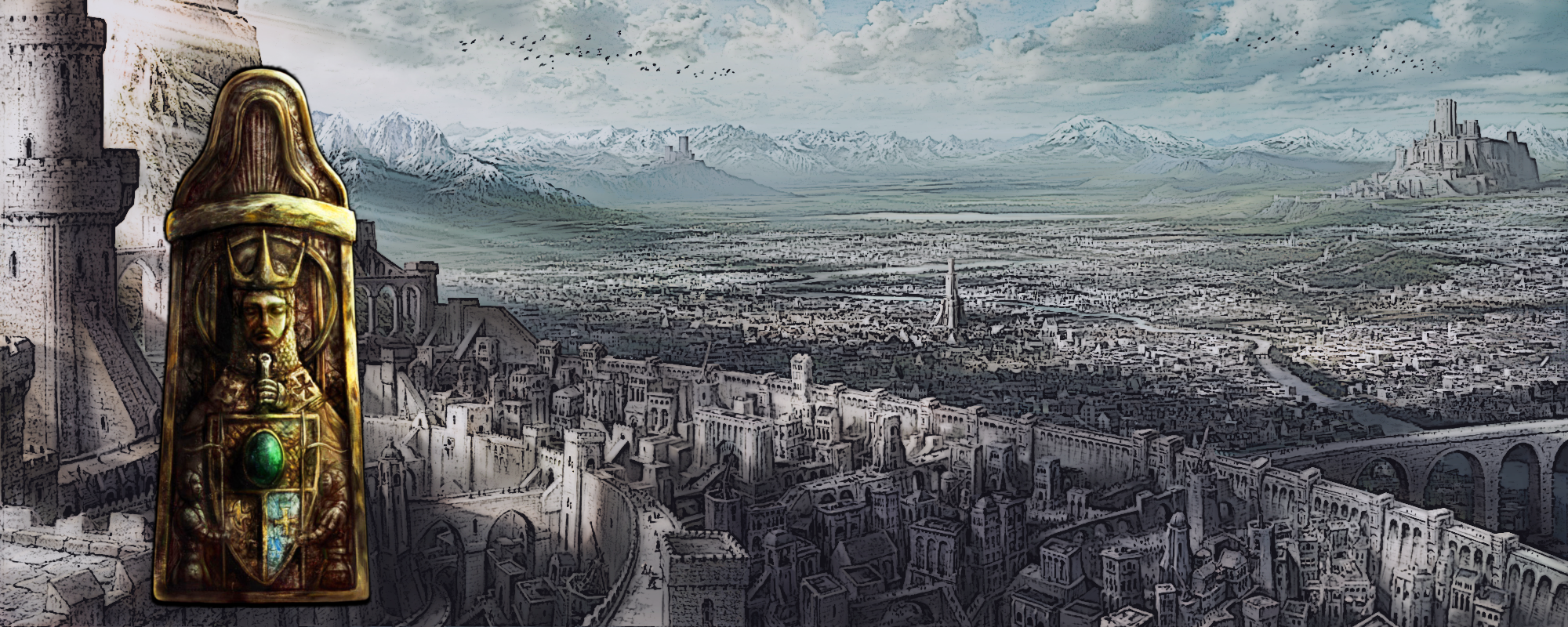
But the nodes of archstones marking the landing spots in the world from the Nexus, aside from those spilt from the belly of a dying demon, are not as mighty as their purpose would hint. They’re lumps of rock shorter than your leg. Aye, they glow and hum and they’ve a lovely sword sticking out from each of them, but they’re nothing like the sentinels represented by their Nexus kin. Actually they’re quite sad looking, these magnificent statues that have locked away evil for countless millennia, because we know they’ve been left to rot through weather and time and human thoughtlessness. They are the physical manifestation of all humanity’s hubris, its delusional pride and self-destruction. It’s no accident that King Allant could now go about dooming the world: his greed stands on the foundations of eons of neglect and disregard.

This pathetic display is also what’s amazing about them.

The archstone at the gates of the Boletarian Palace stands beside a broken fountain atop a tall bridge much younger than the archstone could be. At first glance it’s the middle of nowhere, kind of just leading in to the entrance of the palace if you meander up and down the towers. Stonefang Mine’s entry point is at the foot of a narrow, pointless staircase leading to a road built into the side of a mountain. At your end of the road is the entrance to the mine, the source of Boletarian industry; I’ll bet the path traces hundreds of miles back the other way right to the palace gates. But at the mine’s door, this path runs over a crumbled monolith whose top has been shorn off to keep the road level. It’s the archstone of old and they just paved over it for convenience.

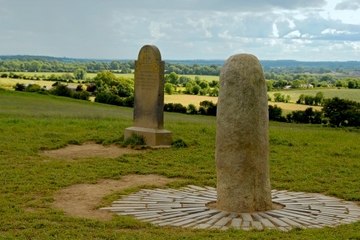
Finally videogames have their Hill of Tara.

tara hill

These locations don’t quite mesh with the tale of legendary monoliths delivered thousands of years ago from on high. Wherever you teleport to from the Nexus you arrive at a lump of archstone that must have been placed rather recently. In the Tower of Latria, inarguably a more recent human creation, the tale is more on the nose: in a cell at the prison’s crown, a corpse cradles the stone. This person dragged it up as far as they could into the sprawling jail until every ounce of strength left in them expended and they died right there. Every single archstone was carried by someone and deposited to facilitate the mission of the demon slayers.

There’s two stories to the archstones representative of the narrative of Demon’s Souls: one of hubris, of a long past of foolishness and everyday human evil that finally brought madness to the world. This is the narrative of decay where shards of archstones are sold at extravagant prices by Patches, the murderous snivelling bastard, and shat out by plague-ridden rats. I’ve looked for a benevolent light in that one, the circle of life and everything, but all I arrive at is how did anyone let it get so bad that rats were allowed to chew away at a statue that protects the world from soul-devouring demons, of all things. In Dark Souls rats drop humanity more than any other terrestrial creature. Once is a metaphor, twice is a motif.

And more presently, there’s the narrative of reconstruction, of everyone struggling to survive in whatever way they can and perhaps contributes to the betterment of all of humanity. But it’s Demon’s Souls so the narrative isn’t all daisy chains and poetry. Encompassed is the merchant who trades to eke out a living and for you to go on living. He helps you, he’s a bit of a git but he helps you. It’s the remains of a storied soldier, charred to death so many times he just… gave up, and you pocket his soul as grit for the mill. The messages of other players voluntarily given to warn you of a disaster they met, and the involuntary bloodstains of their folly. They didn’t die to help you but help you they may. No-one died to help you. Still, you grind their souls to make your bread, using what you can of them to aid your progression in any small, unholy, unthinkable way because this is the grotesque necessity of being a human being.

Though there you may be selfishly drinking souls like you’re on the town, you the Chosen One who will Save the World (aren’t you great with your big head), you can’t help but participate in the narrative of humanity by virtue of you simply existing. Even the nastiest phantom bastard leaves a mark on the world that is their deaths, their knowledge, the challenges they put other players through from which they grow and learn and organize to condemn, weaving into the reconstruction of civilization. Even the poor unfortunate soul who leaves nothing behind to remember them, who couldn’t budge the archstone forward a mere foot, who didn’t even leave their soul behind when they vanished forever, plays their part in in the narrative of humanity. Such is life.

In an odd way, this weird sense of individualistic co-operation is structured into the game’s online as well. It’s always on, always present, always reminding you of the existence of other players and how they share in the struggles of living in a hostile world. Their ghosts phase into step beside you, untouchable, uncommunicable, before they dart off thither on some errand you’ve no doubt in the past run yourself. It doesn’t abate the loneliness but it’s oddly comforting to know they’re there. I stood by an empty doorway and waved to no-one in particular, but maybe someone saw me in their own world and waved back. I’m the Chosen One, wonderful me, but Demon’s Souls is non-existentialist just as it’s non-nihilistic, since it isn’t really about me or you, it’s about us: a narrative of human community, in as much a way as two people living thousands of miles and thousands of years apart can know a communal existence.

It’s not quite a narrative of selflessness, nor is it a narrative of life and death, since deathlessness and lifelessness have little to do with the Boletarian people. Demon’s Souls is like Amy Dentata’s A Night in the Woods: you gather up scraps of newspapers for a fire to warm you through the night. The papers’ headlines tell the story of the collapse of civilization, and you gather them up, and the notes left by more recent residents, and unceremoniously toss them in a barrel as tinder. All the sweat and toil of society, the last few emblems you can find of another living creature, are fertilizer for your needs in the here and now. The noble route of making a museum from them and leaving yourself to die of exposure does not speak of the walk of humanity.

If you liked this article, please consider supporting my writing by visiting my Patreon and becoming a patron.